CALL US
Welfare Benefits & Social Security Law

Clear, specialist advice for PIP appeals, Universal Credit and ESA disputes, benefit overpayments, DWP compliance interviews, Interviews Under Caution and tribunal appeals.
A benefit decision or investigation can affect your income, independence and peace of mind. The rules are technical, deadlines can be short and it is not always clear which evidence will make a difference. Scott-Moncrieff & Associates provides specialist, solicitor-led advice and representation to clients in England and Wales.
The services described on this page are for clients in England and Wales. Scotland operates separate disability benefits, including Adult Disability Payment in place of PIP, through its own tribunal system.
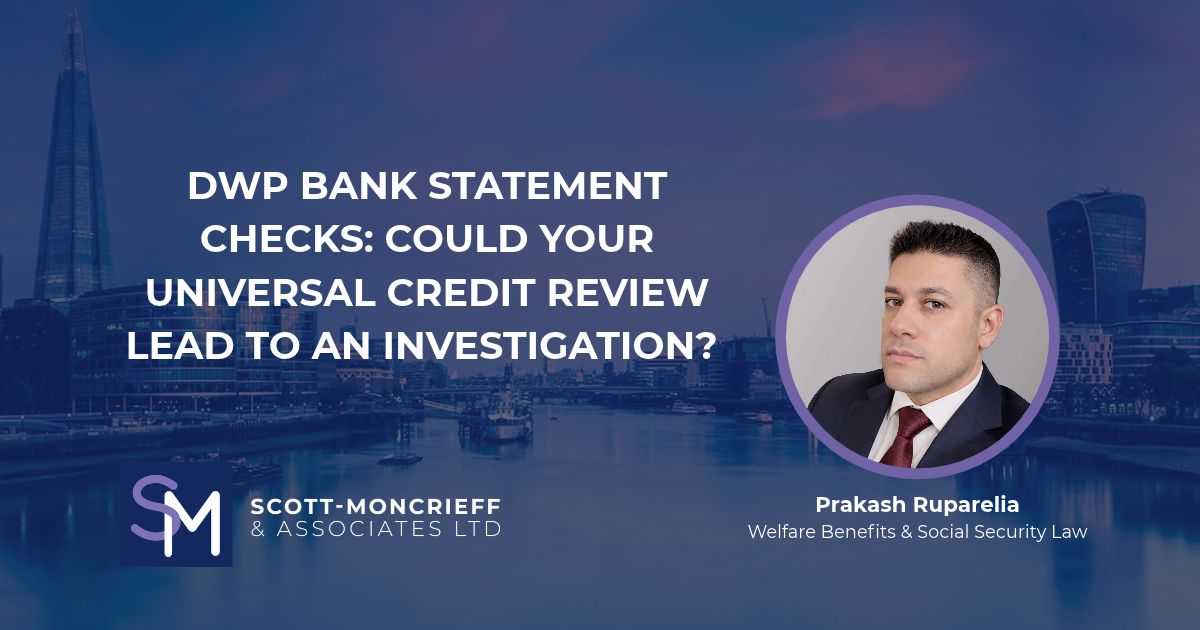
Your matter will be handled personally by Prakash Ruparelia, a welfare benefits solicitor and solicitor-advocate with approximately 25 years’ experience. Prakash provides clear advice, careful written submissions and representation at remote tribunal hearings.
If you need information in a different format, help communicating with us or a reasonable adjustment for a meeting or hearing, please tell us. With your consent, we can also liaise with a family member, carer, advocate or support worker.
How we can help
PIP appeals
A Personal Independence Payment decision should turn on how your health condition affects everyday activities, not simply on your diagnosis. Problems often arise where an assessment report does not reflect fluctuating symptoms, pain, fatigue, prompting, supervision or whether an activity can be completed safely, repeatedly, to an acceptable standard and within a reasonable time. We can review the decision and evidence, identify the relevant PIP descriptors, advise on further evidence and prepare a structured submission for a mandatory reconsideration or appeal. Where instructed, Prakash can also prepare you for a remote First-tier Tribunal hearing and represent you before the panel. No outcome can be guaranteed, but careful preparation helps the tribunal understand the real effect of your condition.
How to Prepare a PIP Mandatory Reconsideration: A Step-by-Step Guide
Universal Credit and ESA work-capability disputes
Work Capability Assessment decisions can have serious financial and practical consequences. We advise on Universal Credit and Employment and Support Allowance disputes involving limited capability for work, limited capability for work and work-related activity, the statutory descriptors and substantial-risk provisions. Our work focuses on what happens when you attempt activities in practice, including fatigue, pain, distress, safety and the consequences of being required to undertake work-related activity. We can advise on a mandatory reconsideration, identify the evidence needed, prepare written grounds and represent you at a remote appeal hearing. We can also consider related questions about capital, deprivation of capital and entitlement where the applicable benefit rules are in dispute.
Benefit overpayments
A demand to repay benefits is not necessarily the final word. The legal questions depend on the benefit, the decision made and the relevant recovery rules. An overpayment may involve incorrect dates, earnings, capital, household circumstances, official error, disclosure, causation or the amount calculated. We can examine the decision and calculation, identify the correct legal test and advise whether there are grounds for revision, appeal or a challenge to recovery. Where the debt is recoverable, we can also advise on practical representations about repayment and hardship. We do not assume that every official-error overpayment is irrecoverable: the position must be assessed under the rules applying to the particular benefit.
DWP compliance interviews
A DWP compliance interview is usually intended to check information about a claim or a change in circumstances. It is distinct from an Interview Under Caution, but it should still be taken seriously, particularly where questions concern living arrangements, work, earnings, savings, property or undeclared capital. We can review the letter, help you understand the issues likely to be raised, identify relevant documents and advise you before the interview. Where appropriate and agreed in advance, we can also attend or assist with follow-up representations. Early advice can help you give an accurate account without guessing, overlooking important context or supplying disorganised information that creates avoidable confusion.
Interviews Under Caution and benefit-fraud investigations
An Interview Under Caution is a formal investigative interview in which answers may be used as evidence. Before the interview, we can seek available disclosure, advise on the allegation and risks, help organise relevant records and discuss the safest lawful approach to answering questions. Prakash can attend the interview where the scope and arrangements are agreed. Investigations may involve alleged undeclared work, living together, capital, property or failures to report a change. If a criminal prosecution is contemplated or commenced, we will explain whether separate criminal-defence representation or specialist counsel is required. Advice should be obtained before the interview rather than after a statement has been given.
Housing Benefit and contrived-tenancy disputes
Housing Benefit can be refused where a local authority decides that a tenancy is non-commercial or was created to take advantage of the scheme. These cases are fact-sensitive, especially where the landlord is a relative or the arrangement is informal. We can examine the tenancy terms, payment history, arrears, the parties’ conduct and the reasons the arrangement was created. We then apply the relevant legal tests rather than relying on labels or assumptions. We also advise on related Housing Benefit issues, including occupation, backdating, non-dependants and overpayments where they arise. If the decision is appealable, we can prepare the appeal and represent you at the First-tier Tribunal.
Other benefits and entitlement disputes
We also advise, where appropriate, on Attendance Allowance, Disability Living Allowance, Carer’s Allowance and Pension Credit decisions. We can consider related issues involving habitual residence and the right to reside, backdating, suspension, underpayments and unreasonable delay. The correct route depends on the benefit and the type of decision, so we first establish the applicable procedure, deadline and evidence before agreeing the work required.
First-tier Tribunal and Upper Tribunal appeals
The First-tier Tribunal is independent of the DWP and local authority. It considers the law, the decision and the evidence and may ask detailed questions about the facts. We can identify the issues, prepare a focused written submission, help you understand the hearing and represent you remotely where instructed. An appeal to the Upper Tribunal is different: it is not a second opportunity to argue the facts and normally requires an error of law. We can advise on requesting a statement of reasons, identify a possible legal error, prepare an application for permission to appeal and conduct an Upper Tribunal appeal where appropriate. Strict time limits can apply, so early advice is important.
How a benefit appeal usually progresses
Decision: check the decision date, reasons and appeal rights immediately.
Mandatory reconsideration: ask the decision-maker to look again. The usual time limit is one month, but check the notice and obtain advice about any late request.
First-tier Tribunal: after the mandatory reconsideration notice, an appeal is usually required within one month. The tribunal is independent of the DWP or council.
Upper Tribunal: a further appeal is normally possible only where the First-tier Tribunal made an error of law. Reasons and permission are usually required.
Time limits depend on the decision and procedure. Do not rely on this summary instead of the notice you received or advice about your particular case.
What happens when you instruct us
Initial review and deadline check. We establish the decision, current stage, issues and urgent dates.
Evidence plan. We identify what the legal test requires and which existing or further evidence may help.
Written case preparation. We prepare the agreed mandatory-reconsideration request, appeal submission, client statement or other representations.
Hearing preparation and representation. If a hearing is required and representation is within scope, we prepare you and represent you remotely.
Advice after the decision. We explain the outcome and any appropriate next step, including implementation or a possible error-of-law challenge.
Why instruct Prakash Ruparelia?
Prakash is Scott-Moncrieff’s specialist welfare-benefits solicitor and solicitor-advocate. With approximately 25 years’ experience, he personally handles every matter he accepts, from PIP and ESA appeals to overpayments, compliance interviews and Upper Tribunal work. You will receive a defined scope of work, clear advice and direct contact with the solicitor responsible for your case.
Scott-Moncrieff & Associates Ltd is authorised and regulated by the Solicitors Regulation Authority, SRA number 596379. Content reviewed by Prakash Ruparelia. Last substantive review: August 2026.
Fixed fees and payment options
We offer fixed fees for many stages of welfare-benefits work, including written appeal preparation, tribunal representation and advice before a DWP interview. Once we understand the stage and complexity of your matter, we will confirm the work included and the fee in writing. Payment plans may be available by agreement. Legal aid is not available through Scott-Moncrieff for this work; we will explain the funding position that applies to the service we are offering.
Frequently asked questions
How do I appeal a PIP decision?
The first step is usually to ask for a mandatory reconsideration. If the decision is not changed, you can usually appeal to the First-tier Tribunal. The normal time limit at each stage is one month, although late challenges may sometimes be accepted. Check the decision notice and obtain advice promptly.
What is the PIP tribunal success rate?
Published tribunal statistics describe outcomes across many appeals, but they cannot predict the result in an individual case. Each appeal depends on its facts, evidence and the legal descriptors. We do not guarantee outcomes. We assess the strengths, weaknesses and evidence in your own case and explain them clearly.
Is a DWP compliance interview the same as an Interview Under Caution?
No. A compliance interview is generally used to check entitlement or changes in circumstances. An Interview Under Caution is a formal investigative interview in which answers may be used as evidence. Either can have serious consequences, so obtain advice if you are unsure why you have been asked to attend.
Can I challenge a benefit overpayment?
Possibly. The decision, amount and recoverability may involve different legal tests depending on the benefit. We can review the calculation, the information provided, the reason for the overpayment and the applicable appeal or recovery rules.
Can you act if I cannot travel?
Yes, subject to the nature of the case and availability. Meetings can usually take place by telephone or video, and Prakash represents clients at remote hearings. We can also discuss reasonable adjustments and communication support.
What if the First-tier Tribunal gets the law wrong?
An Upper Tribunal appeal may be possible where the First-tier Tribunal made an error of law, such as applying the wrong test, acting unfairly, giving inadequate reasons or overlooking material evidence. A statement of reasons and permission to appeal are normally required.
Speak directly to Prakash
Prakash would be happy to offer you a free initial telephone consultation to discuss what has happened, identify the stage reached and consider whether he can assist.
Get in touch via our online contact form or call 020 3972 9011 and ask for Prakash about a welfare-benefits enquiry.
Please mention any urgent deadline, and tell us if you need a reasonable adjustment or communication support. The call does not include document review or formal legal advice.
Key Contacts

Services for You
Services for Business
latest
news & blogs