CALL US

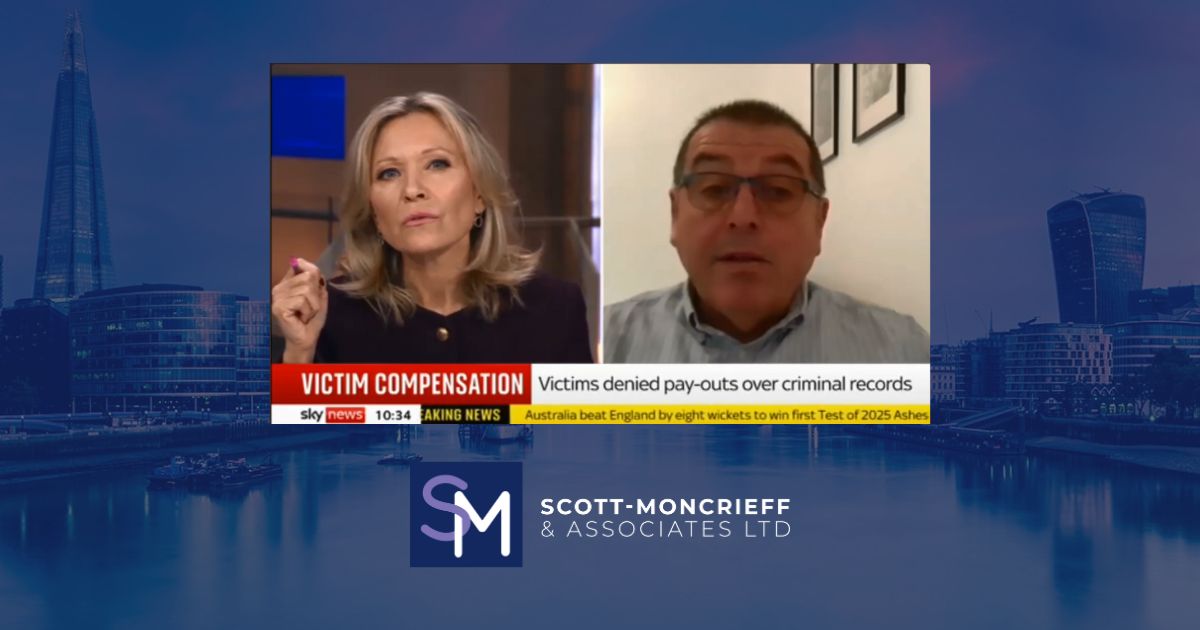
Sky News recently reported on the case of Arthur Sherry, who says his application to the Criminal Injuries Compensation Authority (CICA) was rejected because of previous unspent convictions. Arthur maintains that the offences he was convicted of took place after he failed to persuade the Police to prosecute his abuser, and that the related trauma played a significant role in his behaviour at the time.
By the time he sought advice from Peter Garsden at Scomo, he believed he had exhausted every route of appeal. His case fell under the 2012 Scheme, which removes any discretion for decision-makers to consider the link between trauma and later offending. Although his Judicial Review initially stayed pending wider legal developments and government consultations, both avenues ultimately closed, leaving him without a path through the existing framework.
Peter has continued to raise the issue publicly, drawing attention to the way rigid criteria can disadvantage victims whose behaviour is shaped by the harm they endured. The principle is simple: A fair compensation scheme should be capable of recognising context, vulnerability, and the long-term effects of abuse.
The irony is that the individual concerned would now qualify, as his convictions are spent. Yet the current rules prevent repeat applications, even when the original refusal resulted from circumstances the scheme did not allow adjudicators to assess. His only remaining possibility may lie in revisiting his stayed Judicial Review if the law changes.
Peter’s article offers a thoughtful reflection on why a trauma-informed approach matters and why flexibility is essential if access to justice is to be meaningful.
You can read the full piece here: https://www.abuseadvice4survivors.co.uk/rule-forbidding-convictions-for-abuse-applicants-to-cica-scheme-without-discretion-is-unfair/