CALL US

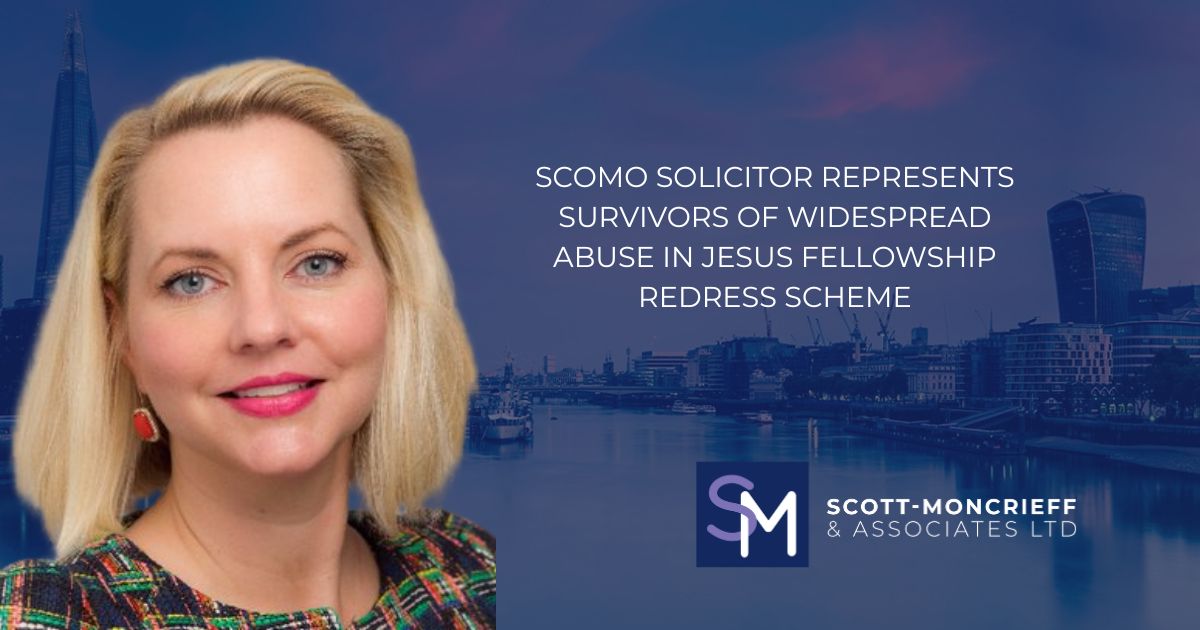
Kathleen Hallisey consultant solicitor at Scott-Moncrieff & Associates, has represented over 100 victims and survivors of abuse in the Jesus Fellowship Church (also known as the Jesus Army), playing a key role in one of the UK’s most significant and complex redress schemes for institutional abuse to date.
The scheme, launched in September 2022, followed years of sustained pressure from former members of the now-defunct religious group, many of whom experienced physical, sexual, emotional and spiritual abuse while living in communal settings overseen by the Church. A final report, published in September 2024, revealed the staggering scale of harm. Of the 601 applications received, 96% resulted in compensation — and an estimated one in six children who lived in fellowship community homes between 1969 and 2019 were abused.
The survivors’ experiences paint a disturbing picture of systemic abuse and institutional failure, with over 260 alleged perpetrators named, including more than 30 allegations related to the Church’s founder, Noel Stanton. Crucially, the report concluded that the harm was “widespread and systematic”, not isolated to particular people or time periods.
Kathleen Hallisey, who specialises in abuse claims and has led legal action against institutions including the Catholic Church, Church of England and Jehovah’s Witnesses, was instructed to represent claimants seeking justice after decades of silence. Her work helped survivors navigate the complex and often retraumatising process of applying for redress.
“This redress scheme is significant not just because of the volume of survivors who came forward, but because it was survivor-led,” said Hallisey. “It was not the Church or the authorities initiating this process — it was former members, many of whom had never previously spoken about what happened to them. Their bravery, and the solidarity shown through the survivors’ association, created real change.”
The scheme allowed for two routes of compensation: one for specific acts of abuse, including rape, corporal punishment, and psychological harm; and another for “community adverse experiences”, which recognised the broader harm caused by communal living — such as the severing of family ties, enforced conformity, and systemic misogyny. Some claimants received up to £50,000, although many felt that no amount of money could reflect the toll of their experiences.
Among those who came forward was Philippa Barnes, a former child member of the Jesus Fellowship, who later co-founded the Jesus Fellowship Survivors Association. Her account, now widely shared in the media, described years of spiritual control, isolation, and witnessing — and experiencing — abuse. She and others played a critical role in bringing the Church’s history into public view and ensuring survivors were heard.
Hallisey’s approach, shaped by her trauma-informed practice, has been praised by clients for balancing legal rigour with compassion. “Many of the people I worked with had never told anyone their full story before,” she said. “My role was to ensure their voice could be heard in a process that too often, historically, has silenced victims.”
Scomo remains committed to supporting survivors of institutional abuse, recognising that legal redress is just one part of the path to healing.
As Hallisey reflects: “There is still work to be done. We need greater legal recognition of the systems of coercive control that cultic groups use, particularly when they target children. But this scheme — and the truth it uncovered — is an important step.”
The redress scheme stands as both a reckoning and a warning. It has helped hundreds begin to rebuild their lives, while exposing the urgent need for reform in how religious and communal organisations are held accountable for harm.
You can read the Guardian article here.