CALL US

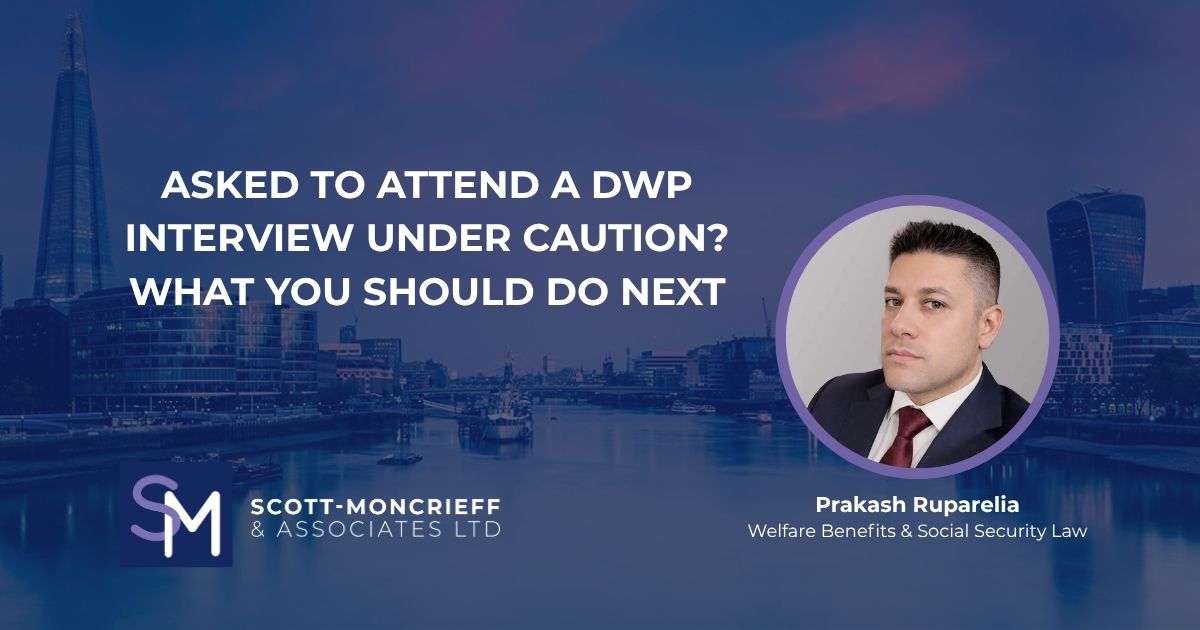
Receiving an invitation to attend an Interview Under Caution with the Department for Work and Pensions can be frightening.
You may not know why you are being investigated, what evidence the DWP holds or whether the matter could lead to an overpayment decision or prosecution.
The first thing to understand is that an Interview Under Caution is not a routine benefits appointment. It forms part of a formal investigation, and the answers you provide may be recorded and used as evidence.
Attendance at a DWP Interview Under Caution is normally voluntary, and the person is not detained or under arrest. However, the DWP may continue its investigation and decide what action to take on the evidence available if the person does not attend
Receiving a letter does not mean that you are guilty. However, it is important to approach the process carefully and obtain advice before attending.
Why might the DWP investigate you?
A DWP investigation may concern:
- alleged cohabitation
- undeclared earnings or self-employment
- savings, property or other capital
- company or director interests
- a disability benefit claim
- a failure to report a change in circumstances
Some investigations arise from official records or data matching. Others may follow information provided by another person.
The facts and legal issues can be more complicated than they first appear. For example, the legal test for whether two people are living together as a couple involves more than simply showing that they spend time at the same address.
Should you take a solicitor to the interview?
You have the right to obtain legal advice and to be represented.
Having a solicitor present is not an admission of guilt. It can be invaluable to help you understand the nature of the allegation, prepare for possible questions and help you to understand the potential consequences of answering certain questions.
The solicitor can review the DWP’s letter and any relevant documents, explain the possible outcomes and help you prepare an accurate account before the interview.
They can also advise you, ask for unclear questions to be explained and help ensure that your answers are properly understood during the interview.
What could happen after the interview?
The DWP may decide to:
- take no further action
- request additional information
- revise your benefit entitlement
- issue an overpayment decision
- offer an administrative penalty
- in limited circumstances, administer a caution
- refer the matter for prosecution
The appropriate response will depend on the evidence and the individual circumstances.
Can you challenge a DWP overpayment?
Yes, you can challenge a decision requiring you to repay benefits.
The first stage is usually a mandatory reconsideration, where the DWP is asked to review its decision.
If the decision remains unchanged, it may be possible to appeal to the independent Social Security and Child Support Tribunal.
Further appeals to the Upper Tribunal may be available where the First-tier Tribunal has made an error of law.
It is important to seek specialist advice to help identify whether the DWP has correctly calculated the overpayment, considered the relevant evidence and applied the right legal test.
What should you do after receiving the letter?
Do not ignore the invitation, but avoid sending a detailed response before you understand the allegation.
Gather the letter, any earlier DWP correspondence and documents connected with the benefit claim. Make a note of any deadline or proposed interview date and seek legal advice as soon as possible.
Preparing carefully can help ensure that your position is presented clearly from the outset.
Speak to Prakash Ruparelia
Prakash Ruparelia is a consultant solicitor with more than 25 years of experience advising on DWP investigations, benefit overpayments, welfare benefits appeals and Tribunal proceedings.
He represents clients at Interviews Under Caution and can assist throughout the mandatory reconsideration, First-tier Tribunal and Upper Tribunal processes.
Prakash acts for clients across England and Wales.
For a confidential initial discussion, contact him directly:
Telephone: 020 3972 9011
Email: [email protected]
This article is provided for general information only and does not constitute legal advice.
Scott-Moncrieff & Associates Ltd is authorised and regulated by the Solicitors Regulation Authority.